
How Do You Get Your Business Cited in ChatGPT?

Quick answer: To get your business cited in ChatGPT, three things have to line up: content that answers real questions in a way an AI can lift and quote, a clear and verifiable identity so the model knows exactly who you are, and independent sources that corroborate your expertise. ChatGPT does not rank a list of links. It assembles an answer from sources it trusts and names a few of them. Becoming one of those trusted sources for the questions your customers ask is the entire job, and you cannot pay to be inserted into the answer.
When someone needs a dentist, a lawyer, or a financial advisor today, there is a growing chance they never open a list of ten blue links. They ask ChatGPT. The assistant gives a short answer that names two or three providers, and if you are not one of them, you were never in the running. There is no second page to scroll to.
The question everyone asks is simple: how do you become one of the names it gives? There is no ad slot to buy and no button that inserts you into the response. But after doing this across a lot of sites, I can tell you the way these systems choose is far more predictable than it looks. You can influence it on purpose, and this guide shows exactly how.
How ChatGPT decides who to name
ChatGPT has no private opinion about your business. When it recommends, it is pattern-matching on public evidence: who is described consistently across the web, who is corroborated by independent sources, and who has content that clearly answers the question being asked. Three signals decide who makes the cut, and they reinforce each other.
| Signal | What it means | How to earn it |
|---|---|---|
| Extractable content | Pages answer a question directly in plain language the model can quote. | Lead with the answer, then elaborate. Add real FAQ sections. |
| A clear identity | The model is certain who you are, where, and what you do. | Consistent name and details everywhere, plus Person, Organization, and Service schema. |
| Outside corroboration | Independent sources describe you for the same expertise. | Accurate directory profiles, reviews, and genuine mentions on trusted sites. |
Step one: answer the real question in the first two sentences
AI assistants extract answers, they do not read your marketing. If your page opens with a paragraph about your passion for excellence, there is nothing to lift. Lead with the direct answer instead. If the question is how much a dental implant costs or what to look for in a personal injury lawyer, the first two sentences should say exactly that, in language a machine can quote verbatim. The nuance and the persuasion can follow.
Then add FAQ sections that mirror the real questions customers ask, worded the way they actually phrase them. Those question and answer pairs are some of the most citable content you can publish, because they map one to one onto how people query an assistant.
Step two: make your identity unmistakable
An assistant will not stake its credibility on a business it cannot verify. This is the entity work: making your name, credentials, location, and services consistent across your site, your profiles, and the directories that matter, then reinforcing all of it with structured data. Person, Organization, and Service schema let a machine connect the content to the credential and confirm that a real, qualified provider stands behind it.
Inconsistency quietly kills you here. A different business name on your site than on your directory listings, a missing address, an author with no verifiable background: each one gives the model a reason to pick someone clearer instead.
Step three: earn corroboration from sources AI reads
The strongest signal is not what you say about yourself. It is what trusted third parties say about you. Mentions, citations, reviews, and profiles on the independent sites assistants actually pull from build the corroboration that turns you from a plausible answer into a confident one. This is slow, unglamorous authority work, and it is the hardest thing for a competitor to copy, which is exactly why it wins.
Step four: measure whether it is working
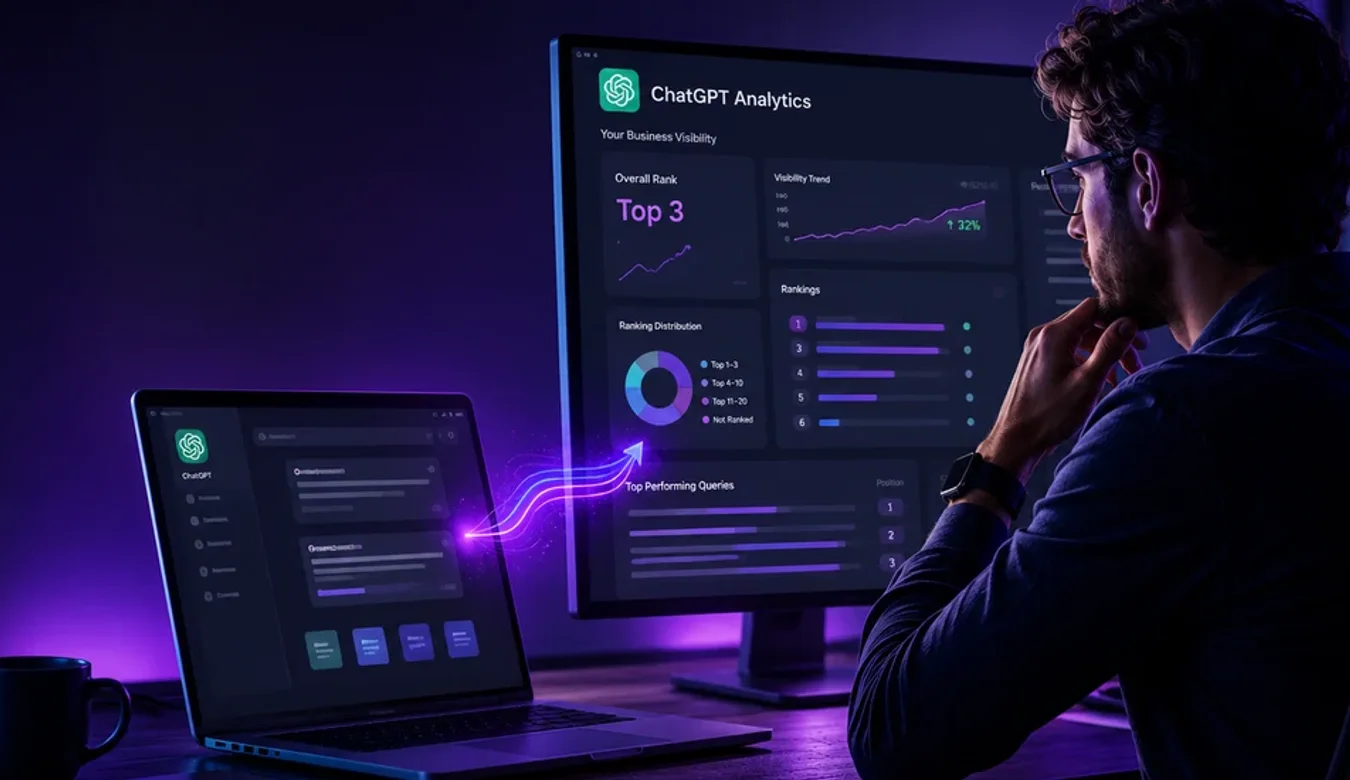
You do not have to guess. Ask ChatGPT, Perplexity, Gemini, and Copilot the questions a customer would ask, and note who gets named. Then watch your analytics: AI assistants send real referral traffic, and you can see it arrive from sources like chatgpt.com in Google Analytics. It shows up as a measurable channel once you are being cited.
The results compound. On one law firm project, restructuring the site for AI extraction and rebuilding its entity signals produced 208,400 AI citations across Bing and Copilot in three months, measured in Microsoft's own AI performance dashboard. On another project, referral sessions from ChatGPT climbed more than 1,100 percent over a matter of weeks. These are dashboard numbers, not estimates, and the approach behind them is boring and repeatable.
The mistakes that keep businesses invisible
When a business never gets mentioned by AI, the causes are almost always the same short list.
- Anonymous content. Pages of advice with no named, credentialed author, which these systems discount hard on health and legal topics.
- An inconsistent identity. The name or address differs across the site, the profile, and directories, so the model cannot confidently tell who you are.
- Marketing prose instead of answers. Pages that describe how committed you are but never actually answer the question a customer asked.
- No outside footprint. Nothing beyond your own website says you exist, so there is nothing to corroborate.
Transparency: CriticNest is written by Ashikur Rahman, who also runs the SEO agency proximityranker.com, where this work is offered as a service. The playbook below is the same one used on client projects, and you can run it yourself.
Why high-trust businesses win this fastest
Not every query gets an AI shortlist, but the high-stakes ones do. Nobody asks ChatGPT which chewing gum to buy. They absolutely ask which implant dentist to trust, whether they have a valid injury claim, or which financial advisor fits their situation. Medical practices, law firms, and financial advisors live exactly where AI recommendations carry the most weight, and where verifiable credibility decides who gets named. If that is your world, the authority you already have can be made legible to these systems, and being one of the two or three names in the answer is worth more than any ranking.
Work with me
Want to find out whether ChatGPT can name your business at all?
Most businesses that never get named in an AI answer have the same gap: the facts about them are scattered, inconsistent or missing from the pages these systems read. The name differs between the website and the directories, the services are buried in vague copy, and nothing on the site states plainly who the business serves and where. That is fixable, but only once you know which of those gaps applies to you, because each one needs different work.
Send me your website and the questions a customer would type into ChatGPT to find a business like yours. I will check how your business is described across the pages these tools draw on, where the facts conflict, and what is missing, then reply with what I would change and a fixed quote. The first look costs nothing. My practice is medical, dental and legal, where being named by an assistant matters most. If it is urgent, WhatsApp is the faster route.

Ashikur Rahman
SEO and AI Search Specialist
The contact links above go to me directly, so I earn from it if you hire me. Nothing else on this page is a paid placement.
- How to Rank in Google AI Overviews: the same idea for Google's answer box, not just ChatGPT.
- What Is Claude Fable 5: the models now writing these answers, explained.
- How I Published 50 SEO Posts With Claude Code: building the extractable content AI actually cites.
Frequently Asked Questions
How long does it take to get cited in ChatGPT?
It varies with your starting authority, but it is often faster than traditional SEO. Businesses with genuine credentials and existing content can start appearing in AI answers within weeks of the extraction and entity work being done, because the assistant is recognizing credibility that already exists rather than waiting on rankings to build.
Can I pay ChatGPT to recommend my business?
No, and anyone promising that is selling something that does not exist. There is no ad slot inside an organic ChatGPT recommendation. You earn the citation by being a genuinely credible, clearly verifiable, easily quotable source. That is the honest answer, and it is also why the advantage is durable once you have it.
Is ChatGPT SEO different from regular SEO?
It overlaps but is not the same. Both reward genuine authority and clean technical foundations. The difference is the target: classic SEO aims for a ranking position, while ChatGPT SEO, also called answer engine optimization, aims to be the source an assistant quotes. That means more emphasis on extractable answers, entity clarity, and third-party corroboration.
How do I know if ChatGPT already recommends me?
Test it directly. Ask the assistants the questions your customers would ask, in your city and service area, and see who gets named and cited. If your competitors appear and you do not, you have an AI visibility gap that widens every month it goes unaddressed.
Does schema markup really matter for AI search?
Yes. Structured data is how you tell a machine, in a format it trusts, exactly who you are and what you offer. Person, Organization, and Service schema help an assistant verify your identity and connect your content to your credentials, which is a prerequisite for being cited with confidence.