
Google May 2026 Core Update: What Changed and How to Recover If Your Traffic Dropped

Google's May 2026 core update finished rolling out on June 2, 2026, twelve days after it started on May 21. It was the second broad core update of the year and, by every volatility tracker that watches this stuff, the bigger one: rankings swung harder than they did in March, with three distinct spikes across the rollout. Google's official description was deliberately boring, "a regular update designed to better surface relevant, satisfying content," but the traffic graphs site owners are staring at this week are anything but. If yours is one of them, the timing of this article is deliberate: Google's own guidance says to wait a full week after completion before reading your data, which makes this week the first window for a clean diagnosis. Here is what changed, how to tell whether the core update or something else took your clicks, and a recovery plan that does not involve panic.
I run CriticNest and proximityranker.com, and I have spent six years doing SEO as a solo operator, which means every core update lands on my own sites before I write about it. The facts in this article were verified on June 10, 2026 against Google's Search Status Dashboard announcements as reported by Search Engine Land and Search Engine Roundtable, and against published Semrush Sensor volatility readings. Where a claim comes from practitioner observation rather than Google, the article says so.
Twelve days, three volatility spikes: the May 23 weekend, May 30, and a final burst on June 2.
Semrush Sensor peaked at 7.8 on mobile and 6.6 on desktop around May 30 and 31, the heaviest core update readings of 2026 so far.
Google called it a regular core update for surfacing relevant, satisfying content, and pointed to its existing people-first content guidance.
Practitioner reports, not Google: health, finance, gambling, and thin product pages saw the wildest swings.
Google says to wait a full week after completion before reading Search Console. That window opened around June 9.
What Happened: The Update at a Glance
| Item | Detail |
|---|---|
| Announced | May 21, 2026, on Google's Search Status Dashboard |
| Completed | June 2, 2026, after roughly 12 days |
| Type | Broad core update, the second of 2026 (March 2026 ran March 27 to April 8) |
| Google's description | "A regular update designed to better surface relevant, satisfying content for searchers from all types of sites" |
| Peak volatility | Semrush Sensor 7.8 mobile / 6.6 desktop over May 30 and 31, with spikes on the May 23 weekend and June 2 |
| New ranking systems | None announced. No update-specific guidance was published. |
For context on how Google's 2026 updates have been landing, I covered the year's earlier turbulence in my breakdown of the February 2026 Discover and core update fallout. The pattern holds: 2026 updates have been frequent, heavy, and increasingly entangled with how AI features reshape the results page.
What Google Actually Changed
The honest answer, and the one nobody selling a recovery service will give you: outside Google, nobody knows the specific signals that moved. Core updates adjust how Google's systems weigh hundreds of quality signals against each other. Google said this one introduced no new ranking systems and pointed site owners to the same people-first content guidance it has published for years.
What we can observe is the scale. Multiple senior practitioners described this update as significantly heavier than March 2026, and the tracker data backs that up. Three separate volatility waves inside one rollout usually means Google pushed distinct phases of changes rather than one adjustment, which is consistent with how the bigger core updates of the past two years have behaved.
The community reporting on who moved is consistent enough to be worth repeating, with the caveat that Google published no winners and losers list and none of this is official: gambling niches saw severe swings, YMYL categories like health and finance moved early and hard, and thin e-commerce product pages were repeatedly named among the casualties. If your site lives in one of those categories, the diagnostic work below matters double.
Step 1: Confirm the Update Actually Hit You
Before touching a single page, prove the case. Google's own method, and the one I use across my sites: wait at least a full week after the rollout completes, then compare that week against the week before the rollout began. For this update that means comparing roughly June 3 to June 9 against May 14 to May 20. Anything you measured mid-rollout is noise; rankings bounced around for twelve straight days, and decisions made on mid-rollout data are how sites talk themselves into deleting content that was about to recover on its own.
In Search Console, run that comparison three ways:
- By page. Did the whole site sink a little, or did a handful of pages fall off a cliff? Site-wide sag points at a site-level quality reassessment. Concentrated losses point at specific pages or a specific content type that the update re-scored.
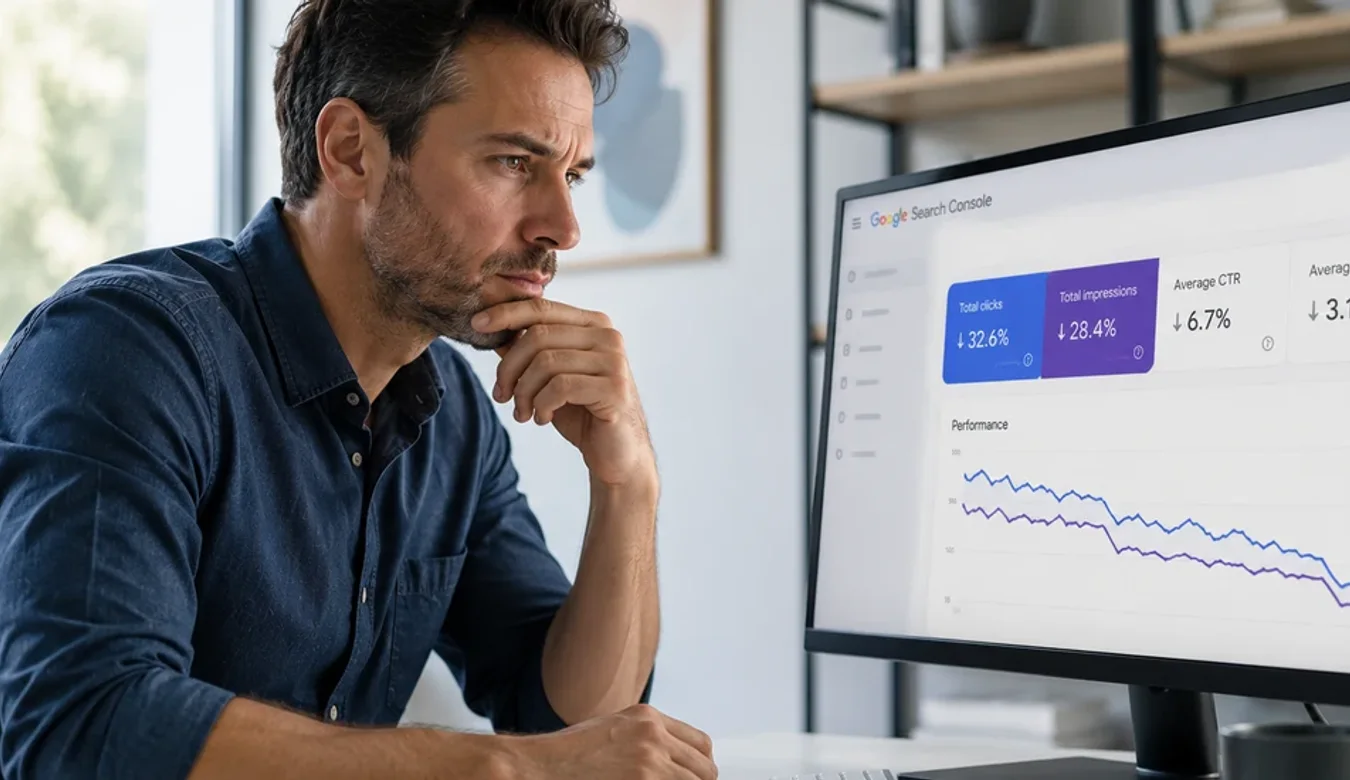
- By query. Look at which queries lost position versus which lost only clicks. A page that holds position 4 but lost a third of its clicks did not get demoted; something on the results page changed above it.
- By country and device. Mobile volatility ran a full point hotter than desktop in this update per the Semrush readings. If your losses are mobile-heavy, check what the mobile results page actually looks like for your money queries before assuming a quality problem.
The Misdiagnosis Trap: Core Update or AI Overviews?
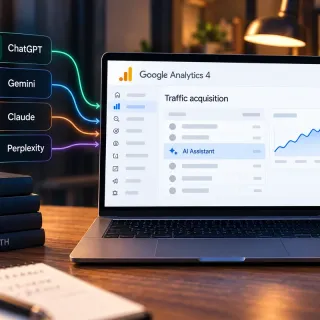
This is the section I wish more recovery guides led with, because the single most common mistake I see right now is treating an AI Overviews click loss as a core update demotion. They look identical on a traffic graph and they have completely different fixes. AI Overviews now appear on a large and growing share of queries, and they take clicks from pages whose rankings never moved. Here is the fast diagnostic:
| What you see in Search Console | Likely cause | What to do |
|---|---|---|
| Positions dropped across many pages, clicks followed | Core update demotion | Quality reassessment, this article's recovery plan |
| Positions stable, clicks and CTR down, impressions stable or up | AI Overviews or richer SERP features absorbing clicks | Citation optimization and intent-matched titles, see below |
| A few specific pages collapsed, the rest untouched | Page-level or topic-level re-scoring | Rebuild those pages against the queries they lost |
| Impressions collapsed too, across the board | Site-level quality or technical issue | Check indexing and manual actions first, then site-level quality |
If your symptoms match the second row, stop reading core update recovery advice; it does not apply to you. Read my breakdown of Google's official AI search guidance instead, because your problem is earning the citation and the click on a results page that now answers part of the question itself.
One more practical note: you do not need an enterprise tool stack to run any of this. Search Console answers every diagnostic above for free, a point I made at length in my piece on whether Semrush is overkill for small sites.
The Recovery Plan That Actually Works
Now the uncomfortable truth that frames everything: Google states plainly that pages hit by a core update have nothing technically wrong to fix, and that meaningful recovery, when it happens, typically arrives at subsequent core updates. Anyone promising a two-week recovery is selling something. What you can control is being measurably better before the next update evaluates you. The work, in priority order:
- Rebuild your hardest-hit money pages first. Take the five pages that lost the most clicks and compare them honestly against what now ranks above them. Not "is my page good" but "is my page obviously the most satisfying result for this query." Outdated screenshots, padded intros, missing pricing, no first-hand evidence: these are the gaps core updates have punished consistently since the helpful content system was folded into core.
- Run Google's self-assessment questions against your worst content type, not your best. Google's people-first content questions (original information, substantial value versus other results, demonstrated expertise, satisfying experience) are aimed at exactly the content a site owner least wants to look at. Core updates evaluate sites partly on the weight of their weakest sections.
- Prune or consolidate genuinely thin pages. Not as panic deletion, but as a deliberate edit: pages with no impressions, no links, and no purpose dilute the site-level quality picture. Merge overlapping articles into one strong page with a redirect.
- Fix intent mismatches in titles and metas. The cheapest wins after any update are pages ranking on page one with terrible CTR. Rewrite those titles to match what the query actually wants. On my own sites this is the single highest-leverage post-update task, and it works regardless of what the algorithm did.
- Strengthen authorship and evidence signals. Real bylines, verifiable claims, primary sources, dates on time-sensitive claims. YMYL niches moved hardest in this update, and YMYL is where Google's quality rater guidelines lean most heavily on demonstrable trust.
- Then be patient on purpose. Track weekly, keep publishing genuinely useful content, and let the next core update re-evaluate the improved site. That is the mechanism. There is no other one.
This is the same diagnostic and rebuild sequence I run on client sites at proximityranker.com, and the order matters: diagnosis before edits, money pages before everything, titles before redesigns.
What Not to Do
The Four Classic Post-Update Mistakes
Mass-deleting content in week one. Mid-rollout and early post-rollout data is noisy, and some losses reverse on their own. Decide on the clean comparison window, not the scary graph. Rewriting everything at once. If you change fifty pages simultaneously, you will never learn what worked. Buying a penalty removal service. A core update is not a penalty; there is no manual action to remove, and Search Console would tell you if there were. Disavowing links in a panic. Unless you have an actual manual action for unnatural links, this does approximately nothing and can hurt.
When Will Rankings Recover?
Google's documentation is candid about this: sites that improve may see some movement between updates as Google's systems continuously refresh, but the most substantial changes typically register at the next broad core update. The 2026 cadence so far has been roughly one core update every two months (March, then May), though Google does not pre-announce them and the historical gap has ranged from six weeks to four months. Realistic planning: treat the next two to three months as the improvement window, and judge the results when the next update completes, not before.
The flip side deserves saying too: if you gained from this update, the same rules apply in reverse. Gains are also re-evaluated at the next update. The sites that hold them are the ones that keep doing the things that earned them.
Frequently Asked Questions
What is the May 2026 Google core update?
It is the second broad core update of 2026, announced on Google's Search Status Dashboard on May 21, 2026 and completed on June 2, 2026. Google described it as a regular update designed to better surface relevant, satisfying content from all types of sites, with no new ranking systems introduced.
When did the May 2026 core update finish rolling out?
June 2, 2026, roughly twelve days after it began on May 21. Volatility trackers recorded three distinct spikes during the rollout: the May 23 weekend, May 30, and a final burst around June 2.
How big was the May 2026 core update?
Larger than the March 2026 core update by the available tracker data. Semrush Sensor readings peaked around 7.8 on mobile and 6.6 on desktop over May 30 and 31, the heaviest core update volatility recorded in 2026 so far, and multiple practitioners described ranking movement as significantly heavier than March.
Which sites were hit hardest by the May 2026 core update?
Google published no official winners or losers. Practitioner reports consistently named gambling niches, YMYL categories such as health and finance, and thin e-commerce product pages as the most volatile areas. Mobile results moved more than desktop throughout the rollout.
How do I know if my site was affected?
Compare a full post-rollout week against the week before the rollout began: roughly June 3 to 9 versus May 14 to 20 in Search Console. Segment by page, by query, and by device. Position drops indicate the update re-scored you; stable positions with falling clicks usually indicate the results page changed around you instead.
My rankings held but traffic still dropped. Was that the core update?
Probably not. Stable positions with declining clicks and steady impressions is the signature of AI Overviews and richer search features absorbing clicks above your listing, not of a demotion. That problem is real but has a different fix: earning citations in AI answers and rewriting titles for the clicks that remain.
How do I recover from the May 2026 core update?
Diagnose first with a clean before-and-after comparison, then rebuild the hardest-hit money pages against the results that outrank them, run Google's people-first self-assessment questions against your weakest content, prune genuinely thin pages, fix title and intent mismatches, and strengthen authorship and evidence signals. Meaningful recovery typically registers at a subsequent core update.
How long does core update recovery take?
Google says sites can see some movement between updates but the most substantial changes appear when the next broad core update rolls out. With 2026 running at roughly one core update every two months so far, a realistic improvement window is two to three months, judged after the next update completes.
Should I delete content that lost rankings?
Not as a first move. Deleting in the noisy first weeks destroys pages that may recover and removes data you need for diagnosis. Prune deliberately: consolidate overlapping articles, redirect merged pages, and remove only content with no impressions, no links, and no purpose a reader would recognize.
When is the next Google core update?
Google does not pre-announce core updates. The 2026 cadence so far has been March and May, roughly every two months, but historical gaps have ranged from six weeks to four months. The next one will be announced on Google's Search Status Dashboard when it begins.
Bottom Line
The May 2026 core update was the year's biggest ranking shake-up: twelve days, three volatility waves, the heaviest tracker readings of 2026, and the usual official silence about specifics. If you lost traffic, this week is when the real work starts, and it starts with diagnosis rather than edits: confirm the update actually demoted you, because a growing share of "core update losses" are actually AI Overviews taking clicks from rankings that never moved. If the update did re-score you, the path back is unglamorous and proven: rebuild your most important pages until they are obviously the best result, fix the weak sections you have been avoiding, and let the next update do the re-evaluating. Nobody can shortcut that, including the people who will email you this week claiming they can.
About the Author
Ashikur Rahman is the founder of CriticNest and proximityranker.com, where he has spent six years as a solo operator building, auditing, and ranking content properties through every core update since 2020. Every article on CriticNest follows the same rule: claims are verified against primary sources on the day of publication, and what cannot be verified does not get published.